Card Testing Attacks: Warning Signs, Costs and How to Stop Them
How card testing attacks work, what they cost in fees and disputes, and the layered controls and response steps that stop them.
Read morePractical guides on payment processing, merchant accounts, and fraud prevention.
How card testing attacks work, what they cost in fees and disputes, and the layered controls and response steps that stop them.
Read moreHow IP, email, phone and BIN fraud filters work, where they misfire, and a simple routine to keep your block lists accurate.
Read moreHow Visa's Acquirer Monitoring Program works: the ratio formula, 2025-2026 timeline, 1.5% merchant threshold, enumeration rules, and how to respond.
Read moreHow Visa and Mastercard calculate chargeback ratios, the thresholds in force for 2026, and a per-MID early warning workflow that buys you time.
Read moreWhen each brand needs its own MID, how to structure accounts by brand, entity, or region, and why MID stacking to hide chargebacks backfires.
Read moreNaming, descriptors, access, reporting, reconciliation, and ratio monitoring: a practical routine for running two to ten MIDs.
Read moreA step-by-step playbook to switch payment CRM while keeping your MID, saved cards, subscriptions, and open disputes intact.
Read moreStripe-style facilitators are fast to start; your own MID gives control and negotiable rates. Compare holds, pricing, and when to move up.
Read moreTwelve payment CRM features worth paying for, the demo questions that expose weak ones, and a printable checklist for vendor calls.
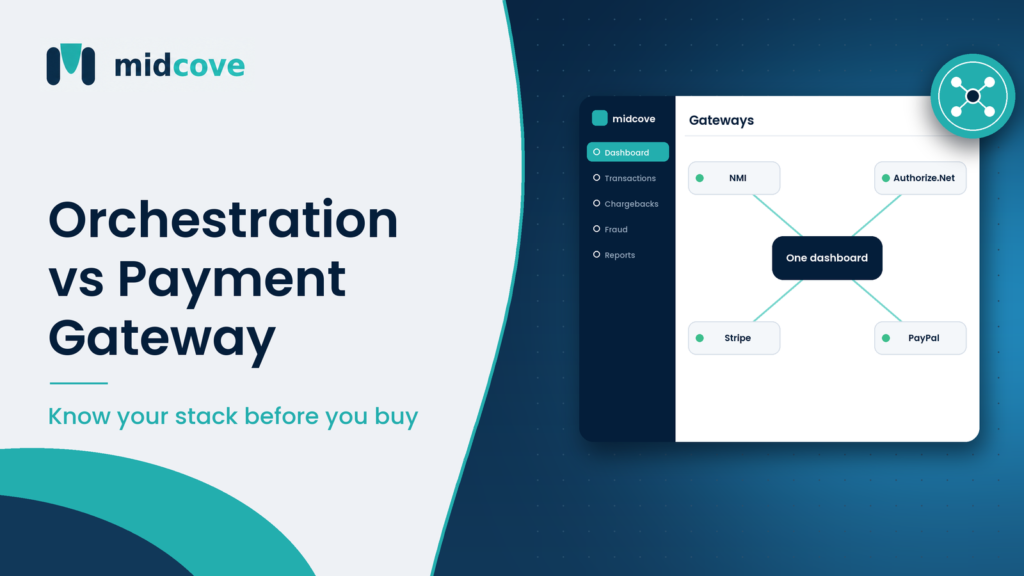
Read moreGateway, processor, acquirer, orchestration, payment CRM: see where each layer sits and which one your business actually needs.
Read moreSet up takes an afternoon, not a migration project.